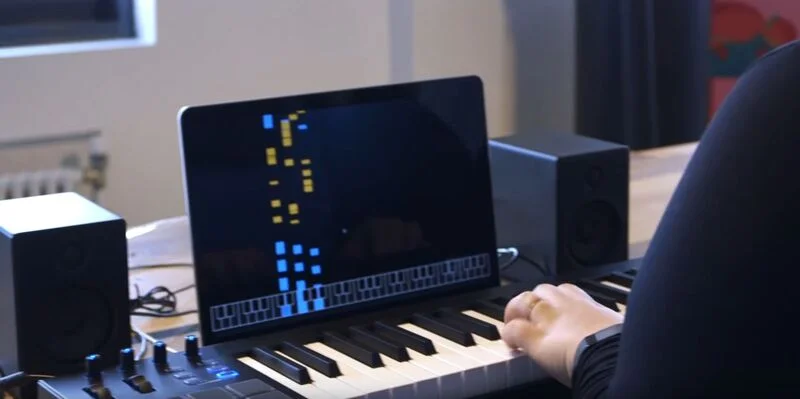
In an era where artificial intelligence is transforming industries from healthcare to journalism, music is no exception. One of the most intriguing developments in this space is how musicians are using AI to collaborate—not with others, but with alternate versions of themselves.
Through AI-generated voice models, algorithmic composition, and machine-assisted production, artists are now performing duets with their digital doppelgängers, blurring the lines between human creativity and machine augmentation.
Far from a novelty, these AI-powered duets are redefining artistic expression and raising fascinating questions about authorship, identity, and the future of musical collaboration.
What Does It Mean to “Duet With Yourself” Using AI?
Traditionally, a duet involves two distinct voices or personalities. In the AI context, however, a musician might record one part of a song and have an AI system generate a complementary performance—sometimes using their own voice, but altered in tone, pitch, or era. The result is a dialogue between versions of the same artist: the current self, a younger self, or even a hypothetical future persona.
Imagine singing a ballad in your natural voice while your 2008 vocal tone, recreated by AI, harmonizes alongside you. This isn’t science fiction—it’s a growing artistic practice.
Reimagining Vocal Identity
AI voice synthesis tools, like those developed by companies such as OpenAI, iZotope, and Voctro Labs, are making it possible to clone and modify a singer’s voice with stunning accuracy. Artists can train an AI model on their vocal data, enabling them to generate entirely new performances—often indistinguishable from real recordings.
This technology allows artists to revisit past styles, experiment with alternative versions of their voice, or even fill in vocals when they are unable to perform due to illness or aging. It also opens up the ability to harmonize with oneself in real time, crafting layered vocals without ever entering a studio booth twice.
Artists Leading the Charge
Several musicians, both established and emerging, are already embracing this new creative frontier:
- Grimes has been vocal about her embrace of AI-generated music. She released a project where fans could use her AI voice model to create songs, effectively democratizing access to her vocal identity.
- Holly Herndon, an experimental electronic artist, developed an AI “digital twin” called Spawn, which she uses to generate harmonies and sound textures, resulting in intricate human-machine compositions.
- Taryn Southern, a pioneer in AI music, used platforms like Amper Music and IBM Watson to co-write entire albums with machine input, blending her own voice with algorithmic elements.
Each of these artists is using AI not as a replacement, but as an extension—a new instrument in the creative toolbox.
Bringing the Past Into the Present
One of the most compelling uses of AI duets involves time. Artists are now able to simulate younger versions of themselves, allowing for nostalgic or reflective collaborations that wouldn’t otherwise be possible. For example, a singer in their 50s could theoretically harmonize with their 25-year-old voice, offering a layered performance that reflects both vocal evolution and emotional growth.
This temporal duet becomes a form of autobiography, where the past and present share the same sonic space.
Such projects offer emotional resonance and narrative complexity, often adding deeper meaning to themes of change, memory, or legacy.
Creative Control and Ethical Considerations
While the technology is exciting, it also introduces complex ethical questions. Who owns an AI-generated voice? Can a label produce music using an artist’s voice model without their involvement? What happens when fans start creating unauthorized duets with celebrity voices?
To address these issues, artists and technologists are calling for transparent frameworks. Some advocate for watermarking AI-generated vocals, while others suggest licensing models that compensate the original artist whenever their voice model is used.
Consent, control, and compensation are becoming the cornerstones of ethical AI music creation.
As the lines blur between what’s human and what’s artificial, maintaining clear boundaries becomes essential to protect creative rights and personal identity.
Impacts on Live Performance
AI duets aren’t confined to the studio. They’re starting to make appearances on stage. Some performers are using pre-generated AI vocals as backing tracks during concerts, creating immersive experiences where audiences hear layered renditions of a single voice—some live, some synthetic.
In more experimental settings, artists are performing side-by-side with holographic projections or digital avatars, each powered by AI vocals. These hybrid performances challenge the conventions of liveness and raise intriguing questions about what audiences value most: the voice, the presence, or the emotion?
Accessibility and Expansion
For independent musicians and creators without access to large production teams or backing vocalists, AI tools can be game-changing. A solo artist can now produce richly textured harmonies or even simulate duets with other voices, all while maintaining artistic control.
AI also opens up possibilities for people with vocal limitations, such as those recovering from surgery or individuals with disabilities. Through voice models trained on their healthy or ideal voice, artists can continue to express themselves vocally, even when they physically cannot.
Genre Innovation and Experimental Possibilities
The use of AI to self-duet is also pushing musical boundaries. Artists are creating genre hybrids that would be difficult to achieve without machine assistance. A single track might blend baroque choral elements, EDM drops, and folk harmonies—all performed by one singer and their AI-generated counterparts.
This ability to simulate different tones, timbres, and styles within a single performance opens up vast experimental territory. It enables musicians to become chameleons within their own work, crafting sonic journeys that would have once required an entire cast of collaborators.
The Audience Perspective
Listeners are also adapting. While some may initially feel skeptical about AI involvement in music, most respond positively when the emotional core remains intact. The key is transparency—when fans know that a digital voice is being used creatively and ethically, they’re more likely to appreciate the innovation.
Moreover, many fans are fascinated by the concept of hearing an artist in different forms. The idea of a “duet with yourself” is inherently personal, and when executed well, it adds layers of meaning that traditional compositions may not reach.
A New Kind of Harmony
The rise of AI duets represents a fascinating intersection of creativity and technology. Far from replacing human artistry, these tools are enabling new forms of self-expression—allowing musicians to collaborate with themselves across time, tone, and imagination.
By harmonizing with their own digital echoes, artists are not just making music — they’re making a statement about what it means to evolve, reflect, and reimagine identity in the age of intelligent machines.
As this trend continues to grow, it’s likely we’ll see even more intimate, complex, and genre-defying works emerge—each one shaped by the curious, collaborative dance between human and machine.