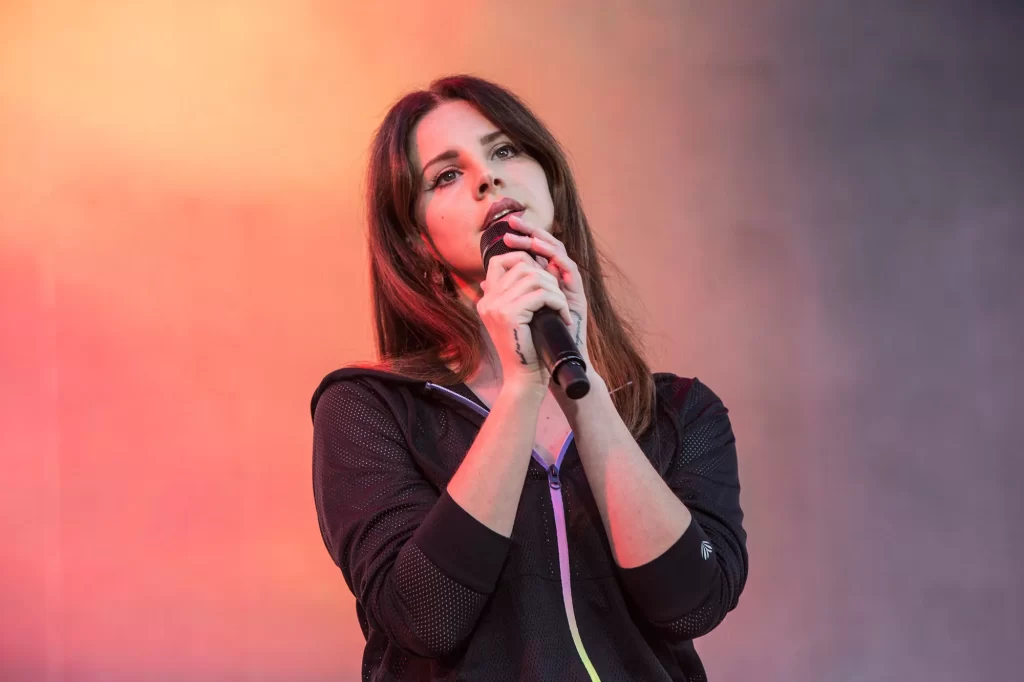
Lana Del Rey is now a household name, with billions of streams and a devoted global fanbase. Her signature blend of melancholic lyricism, cinematic production, and retro Americana has carved out a distinct lane in modern music. But unlike many of her contemporaries, Del Rey didn’t rise overnight. Her journey to stardom was anything but swift. It was a slow burn — marked by reinvention, rejection, and relentless creative output.
From pouring coffee behind counters to topping charts and influencing a generation, Lana Del Rey’s story is a testament to the power of patience, persistence, and the long game of artistry.
Early Life and Musical Roots
Born Elizabeth Woolridge Grant in New York City and raised in Lake Placid, Lana Del Rey’s early life was far from the glamour that would later define her aesthetic. After attending a boarding school in Connecticut and dabbling in philosophy at Fordham University, she began exploring music more seriously, performing under various monikers and uploading homemade tracks to the internet.
Her earliest work, raw and stripped down, hinted at a voice that was hauntingly unique — but far from fully formed.
Long before her name was known, she was experimenting with different sounds and identities, sometimes performing under her birth name, other times as Lizzy Grant.
The Struggle to Break Through
Despite her dedication, her early efforts didn’t yield immediate success. Her first official album, Lana Del Ray A.K.A. Lizzy Grant, was released in 2010 through a small indie label and received little commercial attention. At the time, she was working odd jobs — including stints as a barista and waitress — just to make ends meet.
During this period, she lived in a trailer park, wrote songs in her spare time, and tried to navigate the confusing world of record deals, image expectations, and internet skepticism. She had talent, but the industry didn’t quite know what to do with her yet.
The Viral Moment That Sparked Controversy
Everything changed — and simultaneously intensified — with the release of “Video Games” in 2011. Uploaded to YouTube with a homemade video montage, the song was an unexpected hit. Its moody ambiance, swelling strings, and melancholic nostalgia stood in stark contrast to the upbeat pop dominating the charts at the time.
“Video Games” quickly went viral, praised for its originality but also met with skepticism. Critics questioned her authenticity. Was Lana Del Rey a character? A record label creation? A repackaged persona?
In an era obsessed with transparency, Del Rey’s old-Hollywood mystique made her a polarizing figure. She wasn’t easily categorizable — and that made people uneasy.
Her much-publicized performance on Saturday Night Live in 2012, which some criticized as underwhelming, further intensified public scrutiny. For many artists, this level of backlash would have been a career-ending blow. For Del Rey, it was just the beginning.
Staying Power Through Consistency
Rather than retreat in the face of criticism, Del Rey doubled down. Her major-label debut, Born to Die (2012), featured lush orchestration, hip-hop beats, and poetic lyrics that established her as a bold and distinctive voice. Though reviews were initially mixed, the album slowly gained traction — selling millions of copies and producing hits like “Summertime Sadness” and “Blue Jeans.”
Each subsequent release — from Ultraviolence to Honeymoon, Lust for Life, and Norman Fucking Rockwell! — further cemented her status as a serious and evolving artist. She didn’t chase trends. She created moods. Her slow-burning ballads and confessional storytelling found a loyal audience that grew with her.
In a pop culture world obsessed with immediacy, Lana Del Rey played the long game — and it worked.
Building a Cult Following in the Streaming Era
The rise of streaming platforms helped Del Rey tremendously. Her long, atmospheric tracks that might have been considered too unconventional for radio found new life in curated playlists and moody TikTok videos. Songs like “Young and Beautiful” and “Brooklyn Baby” amassed millions of streams, gaining relevance even years after their initial release.
Streaming also allowed her fans to explore her deep catalog at their own pace, building a layered appreciation for her evolving sound. This evergreen interest translated into longevity — something many chart-topping acts struggle to maintain.
Artistry Over Algorithm
One of the reasons Del Rey stands apart is her refusal to conform to mainstream pop formulas. Her music often eschews traditional structures. She blends poetry, jazz, trip-hop, Americana, and even spoken word. Her lyrics tackle themes of sadness, desire, decay, and longing in ways that feel both timeless and modern.
She wasn’t engineered for algorithmic success — she earned her audience through substance and style.
In doing so, she helped pave the way for a new kind of pop artist: introspective, aesthetic-driven, and not afraid to be misunderstood.
Critical Redemption and Cultural Influence
It took years, but critics eventually caught up with what fans already knew. Her 2019 album Norman Fucking Rockwell! received widespread acclaim, with Rolling Stone, Pitchfork, and The New York Times hailing it as one of the year’s best. She was finally recognized not just as a successful pop star, but as a serious songwriter and cultural figure.
Her influence can now be seen in a younger generation of artists, including Billie Eilish, Lorde, and Olivia Rodrigo, who cite her as an inspiration. Del Rey made it acceptable — even powerful — to be sad, slow, and poetic in a world that often prizes the opposite.
The Quiet Victory
Lana Del Rey’s path to success wasn’t linear. It wasn’t marked by explosive debuts or viral gimmicks. Instead, it was built on a foundation of raw talent, unwavering vision, and a refusal to conform. From serving coffee behind the counter to streaming billions of plays across the globe, she rose not with noise, but with nuance.
Hers is the story of an artist who didn’t rush toward the spotlight — she let the spotlight catch up to her.
In an era of instant fame and fast fades, Lana Del Rey proves that sometimes, the slow burn lasts the longest. And for millions of fans around the world, that burn still hasn’t cooled.