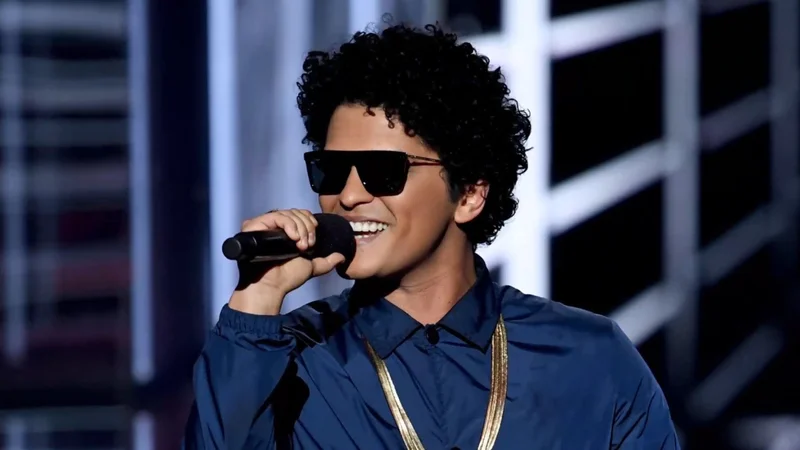
To the outside world, Bruno Mars seemed to appear out of nowhere, catapulting into superstardom with hits like “Just the Way You Are” and “Grenade.” But in reality, his journey was anything but sudden.
Before becoming a global icon known for his electrifying performances and genre-blending sound, Mars spent years behind the scenes, facing rejection, financial struggle, and creative roadblocks.
His path to stardom is a reminder that so-called “overnight success” is often the result of tireless effort, persistence, and a deep-rooted belief in one’s own talent.
Early Roots: A Performer from Day One
Born Peter Gene Hernandez on October 8, 1985, in Honolulu, Hawaii, Bruno Mars was raised in a musical family. His father was a Latin percussionist, and his mother a singer and dancer. By age four, he was performing as a tiny Elvis Presley impersonator in his family’s show — a novelty act that quickly gained local attention.
“My whole life I’ve been performing. That’s all I know,” Mars once said in an interview, emphasizing how performance was not just a career goal, but a lifelong identity.
After high school, Mars moved to Los Angeles to pursue music professionally — a decision that would test both his passion and resilience.
The Early Struggles in Los Angeles
Mars’s initial years in L.A. were marked by struggle. He signed with Motown Records early on, but the deal fell through without any releases. At one point, he considered giving up on performing entirely and focused instead on songwriting and producing.
Living on meager income and crashing on friends’ couches, Mars quietly began building industry relationships. His voice and charisma were undeniable, but his style didn’t fit neatly into any existing mold. At a time when music executives were looking for the next big hip-hop star or R&B diva, Mars’s retro influences and smooth pop vocals made him a harder sell.
Finding a Lane Through Songwriting
Unable to find traction as a solo artist, Mars redirected his efforts toward songwriting. Alongside partners Philip Lawrence and Ari Levine, he formed the production team known as The Smeezingtons. This trio began crafting songs for other artists, allowing Mars to hone his skills and experiment with sound without the spotlight.
The turning point came when they co-wrote and produced hits like:
- “Right Round” by Flo Rida
- “Billionaire” by Travie McCoy (featuring Bruno Mars)
- “Nothin’ on You” by B.o.B (featuring Bruno Mars)
Mars’s smooth vocals and emotional delivery on “Nothin’ on You” caught the attention of both fans and industry gatekeepers. Though he was technically a featured artist, the performance served as his unofficial introduction to the mainstream.
Breaking Out with “Doo-Wops & Hooligans”
After years of background work, Mars released his debut album Doo-Wops & Hooligans in 2010. The record was a commercial and critical success, showcasing a blend of pop, soul, reggae, and R&B. The lead single, “Just the Way You Are,” topped charts globally and earned Mars his first Grammy Award.
But Mars wasn’t content to be boxed in as just a pop singer. Each track on the album offered a different facet of his artistry — from the reggae-tinged “Liquor Store Blues” to the heartfelt ballad “Talking to the Moon.”
“I want to make music that has feeling,” Mars said at the time. “Not just something you hear — something you experience.”
Reinvention and Range: From Crooner to Showman
Rather than rely on a winning formula, Mars used his second album, Unorthodox Jukebox (2012), to explore new territory. With hits like “Locked Out of Heaven,” “When I Was Your Man,” and “Treasure,” he channeled everything from The Police to Michael Jackson, James Brown, and Prince.
His refusal to conform to genre expectations became a defining trait. With every release, Mars reinvented himself — not out of necessity, but out of a genuine love for musical history and performance.
The album’s success confirmed that Mars wasn’t a fluke; he was a craftsman with a deep knowledge of his influences and a willingness to evolve.
Super Bowl Halftime Show: A Star Cemented
One of the most pivotal moments in Bruno Mars’s career came in 2014 when he headlined the Super Bowl XLVIII halftime show — a rare honor for an artist with only two albums. Despite doubts about whether he was ready for such a massive stage, Mars delivered a dynamic, high-energy performance that silenced critics and won over millions of viewers.
With a live band, James Brown-inspired moves, and flawless vocals, Mars proved that he wasn’t just a recording artist — he was an entertainer in the classic sense.
24K Magic and Retro-Futurism
Mars’s third studio album, 24K Magic (2016), leaned fully into funk, R&B, and ’90s nostalgia. The title track, along with “That’s What I Like” and “Finesse,” paid tribute to New Jack Swing and the golden era of dance-pop.
The album was a celebration of confidence, rhythm, and style — a sonic and visual throwback wrapped in modern production.
It won seven Grammy Awards, including Album of the Year and Record of the Year, solidifying Mars’s place among the greats. By this point, his climb was complete — not only had he reached the summit, but he had done it on his own terms.
Silk Sonic and the Power of Collaboration
Never one to rest on past achievements, Mars teamed up with Anderson .Paak in 2021 to form Silk Sonic. Their debut album An Evening with Silk Sonic blended vintage soul, smooth R&B, and theatrical flair.
Songs like “Leave the Door Open” became instant classics, winning multiple awards and dominating the charts. Once again, Mars had found a way to celebrate musical heritage while staying culturally relevant.
Earning the Spotlight
Bruno Mars’s journey from impersonating Elvis in Hawaii to becoming one of the most celebrated performers in modern music is a testament to perseverance, adaptability, and authenticity. His rise wasn’t sudden — it was the result of years of unseen labor, creative evolution, and a deep-rooted passion for his craft.
What may have looked like overnight success was actually a long, deliberate climb. And through it all, Mars has remained committed to his vision: to make music that moves people — body, heart, and soul.