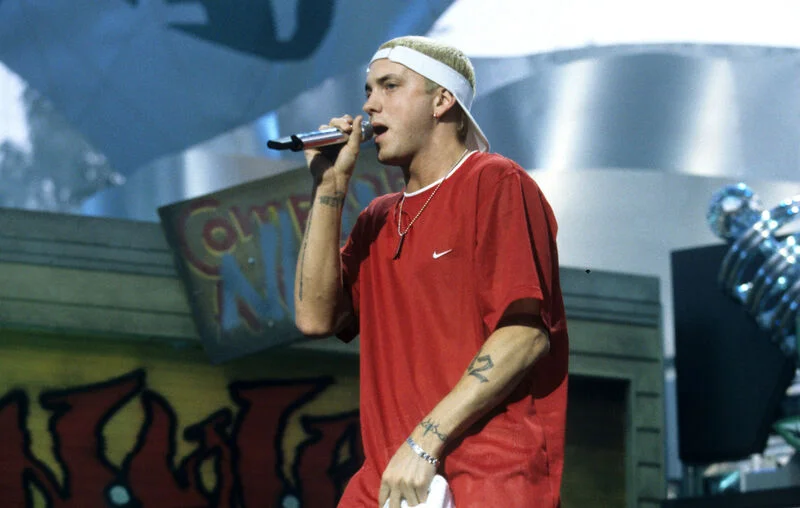
When Eminem released “Stan” in 2000, few could have predicted that it would become one of the most referenced songs in both hip-hop and internet culture. What began as a dark narrative about obsessive fandom has since evolved into a term used daily online, crossing generational and cultural lines.
More than two decades later, “Stan” is not only considered one of Eminem’s most powerful tracks — it’s a linguistic and conceptual phenomenon. But why has this song, with its haunting storytelling and bleak conclusion, remained so relevant in an era of memes, social media, and parasocial relationships?
The Anatomy of “Stan”
“Stan” was the third single from Eminem’s acclaimed album The Marshall Mathers LP, featuring British singer Dido on the hook. Built around a sample from her song “Thank You,” the track tells the story of an obsessive fan named Stan who writes increasingly desperate letters to Eminem.
Over four verses, the tone escalates from admiration to frustration to rage — culminating in a tragic ending, where Stan kills himself and his pregnant girlfriend after feeling ignored by his idol.
The final verse reveals Eminem responding too late, realizing the depth of Stan’s distress only after hearing about the incident on the news. The structure of the song — a narrative told through letters — was groundbreaking, showcasing Eminem’s storytelling prowess and emotional range.
A Commentary on Obsession and Celebrity
Though the song is fictional, “Stan” highlighted real issues that were becoming more visible at the turn of the millennium: the intensity of celebrity worship, the mental health implications of parasocial relationships, and the potential consequences of unchecked fandom.
Stan isn’t portrayed merely as a villain or a lunatic. He’s a deeply disturbed, lonely individual seeking connection and validation. His spiral into self-destruction reflects a broader critique of how fame can distort relationships, both for the fan and the celebrity.
At the time, the song resonated with listeners because it explored these themes with nuance. Today, it resonates even more because it predicted the environment we now live in — one where fan culture is more visible, accessible, and influential than ever before.
“Stan” Becomes a Term
By the late 2000s, something fascinating happened: “Stan” entered the lexicon as a noun and verb. Initially used to describe overzealous fans, the term gradually took on broader meaning.
- “I’m a Beyoncé stan.” – Meaning: I support her unconditionally.
- “Don’t stan problematic people.” – Meaning: Don’t support them blindly.
- “We stan a legend.” – Meaning: We admire them with enthusiasm (often ironically).
What’s particularly intriguing is how the word has evolved. In its original context, “Stan” was a warning — a cautionary tale about obsession gone too far. In online culture, however, it has become both celebratory and critical, depending on usage and tone.
Fan Culture in the Social Media Age
The rise of platforms like Twitter, Instagram, TikTok, and Reddit has transformed how fans interact with celebrities. Today, fans can engage directly with artists, organize mass streaming campaigns, and even influence career decisions.
“Stan” anticipated this shift. Though written before the social media boom, it encapsulated the emotional highs and lows of being a devoted fan — the joy of feeling close to someone famous and the anguish of being ignored.
Stan’s intensity mirrors the behavior seen in modern fandoms — from “fancams” and hashtags to viral cancellation campaigns and hyper-defensive comment sections.
In this new reality, stanning has become both a form of identity and a tool of digital influence. Entire communities now rally behind artists, sometimes with cult-like devotion, echoing the same dynamic Eminem explored two decades ago.
Memes, Irony, and Linguistic Flexibility
The staying power of the term “stan” is partly due to its meme-ability. It works across genres and subcultures, easily adapting to new contexts. While hip-hop fans may use it seriously, others invoke it ironically — declaring “I stan this spreadsheet layout” or “We stan a functional coffee machine.”
This linguistic flexibility allows the term to remain fresh. It can be used earnestly, sarcastically, or even critically. People now say things like “Don’t be a Stan” to caution against blind loyalty, circling back to the term’s darker roots.
The word has also been officially recognized. In 2017, “stan” was added to the Oxford English Dictionary, defined as an “overzealous or obsessive fan of a particular celebrity.” That inclusion marked its full transition from song lyric to mainstream vocabulary.
Eminem’s Complicated Relationship With “Stan”
Eminem has frequently revisited the “Stan” narrative throughout his career. He referenced the character in later songs like “Bad Guy” and “River,” exploring themes of guilt, legacy, and the unintended consequences of fame.
While he once dismissed fan expectations and criticized the intensity of his following, Eminem has come to acknowledge the power — and danger — of being idolized. His 2020 track “Unaccommodating” referenced fan culture again, showing that even two decades later, the themes of “Stan” continue to influence his work.
Pop Culture Parodies and Tributes
“Stan” has also inspired numerous parodies, covers, and tributes. Comedians like Saturday Night Live have spoofed the song, while artists across genres have borrowed its format. Even non-music media — from film to video games — have mimicked its structure to explore similar dynamics of obsession and fandom.
Perhaps most notably, Elton John performed the song live with Eminem at the 2001 Grammys, offering both a cultural moment and a bridge between generations. The duet highlighted the song’s emotional weight and its capacity for healing, especially amid controversy surrounding Eminem’s lyrics at the time.
The Psychological Lens
From a mental health perspective, “Stan” opened the door to conversations about emotional regulation, unhealthy attachments, and the effects of neglect. The song’s emotional descent offered an unfiltered look at how unresolved trauma and isolation can lead to destructive behavior.
In modern discourse, where mental health awareness is increasing, “Stan” serves as a haunting but necessary reflection of what can happen when empathy, boundaries, and support systems fail.
A Cautionary Tale That Evolved into Culture
“Stan” was never meant to be a meme, a slang term, or a viral catchphrase. It was a complex narrative that explored admiration, desperation, and the dark side of fandom. But like all powerful stories, it took on a life of its own.
Today, the word “stan” is a fixture in online language, used by millions who may not even know its origin. Yet the heart of the story remains — a reminder of the thin line between connection and obsession, between admiration and identity loss.
In a world where everyone follows someone, “Stan” still echoes — not just as a song, but as a warning, a lens, and a cultural artifact that defined and predicted the world we live in now.